Before Comparing WordPress Maintenance Prices, Compare the Work
Two WordPress maintenance proposals can both say “updates, backups and support” while covering quite different work. One may include checking an enquiry form after an update. Another may cover the update itself, with investigation billed separately if something stops working.
That difference is difficult to see in a headline price. Before comparing totals, put the work into a format that someone can check after it has been done.
Start with the same website and service period
Record which installation the proposal covers, including any staging site, language versions and important integrations. A brochure site and a WooCommerce store do not necessarily need the same checks. Nor does a newly handed-over site necessarily start from the same position as a site with documented access, licences and a tested recovery process.
Separate the initial handover from recurring maintenance. If someone needs to trace hosting access, identify an unsupported plugin or establish a backup process, make that preparation visible. Otherwise, two proposals may appear to cover the same period while one also includes work to make the site maintainable.
Ask what happens around an update
“Plugin updates included” leaves several questions open. Who reviews compatibility? What happens if a plugin requires a licence renewal? Which functions are checked afterwards? If a test fails, does the provider roll back, investigate within an allowance, or ask for approval for additional work?
WordPress's own update guidance recommends taking a backup before updating and checking compatibility. It also explains that there is no single update order that suits every website. A proposal should translate that general guidance into an approach appropriate to the particular site.
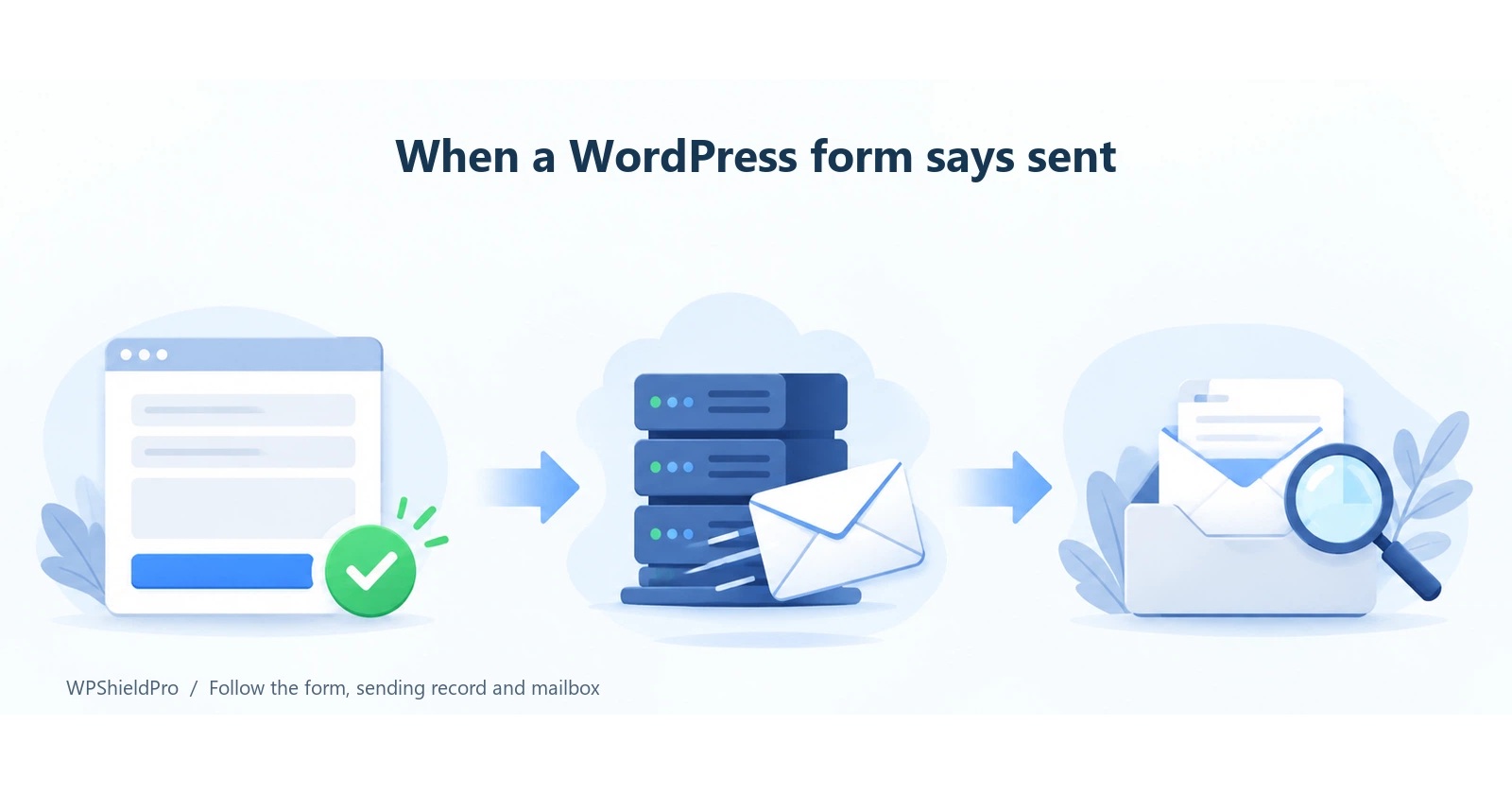
For a site that depends on enquiries, useful checks might include opening a service page, sending a test form and confirming that its expected delivery path works. These are examples to agree on, rather than a universal test suite or a promise that every issue will be detected.
Keep backup, monitoring and incident work separate
A backup schedule tells you when copies are made. It does not, by itself, tell you whether the copies can be restored, where restoration will happen, or whether recovery labour is included.
Ask about storage, retention, access and the way a recovery test is arranged. Any test should avoid overwriting the live site without an agreed recovery plan. If hosting already provides backups, establish who checks them and who is responsible for using them during an incident.
Monitoring also needs a boundary. Detecting an unavailable page, acknowledging the alert and restoring the website are different activities. Record the agreed service hours, escalation route and responsibilities. Avoid treating the word “monitoring” as evidence of a particular response or recovery time.

Make support time understandable
If support is measured in hours, ask what consumes the allowance and what record you receive. Does diagnosis count? Are small content changes included? What happens when the allowance runs out? Who approves work that exceeds it?
Keep hosting, domain renewals and commercial plugin licences visible as separate resources, even when the same supplier helps manage them. Record who owns the accounts and how renewals are authorised. A labour allowance and a licence subscription should not become indistinguishable just because they appear on the same invoice.
Compare one ordinary request from start to finish
An illustrative request is often easier to discuss than a long list of service labels. For example: change the fields on an enquiry form and check that submissions still reach the intended destination.
The following is a discussion template, not a description of a particular provider's contract:
| Stage | Question to agree | Useful evidence |
|---|---|---|
| Scope | Which form, fields and delivery destination are changing? | A short approved change description |
| Preparation | Is a backup or staging test needed? | The agreed preparation record |
| Verification | What makes the change acceptable? | Test submission and delivery results |
| Release | Who approves moving the change to the live site? | Approval and a release note |
| Follow-up | What happens if the agreed test fails? | A recorded next action and owner |
The same exercise can reveal whether communication, testing and release work are included in support time. It also gives both sides a practical way to review the completed work without relying on a vague claim that the website was “maintained”.
A useful comparison ends with an understandable scope: covered sites, recurring tasks, checks, incident responsibilities, support allowance and external costs. Once those are aligned, the price has a clearer meaning.
Adapted from the original WPShieldPro guide to maintenance quotes and service scope, published by Zhengzhou Wozhitao Technology Co., Ltd. The illustrations come from that guide.
About the author
- WordPress maintenance and troubleshooting notes from WPShieldPro, operated by Zhengzhou Wozhitao Technology Co., Ltd. Based in Zhengzhou, China. Website: https://www.wpshieldpro.com/en/
Comments
Join the discussionNo comments yet. Be the first to comment.